
The U7 screening: the big language check
This time our presentation of the U examinations is about the U7. And a big block is how far the child has already developed linguistically.
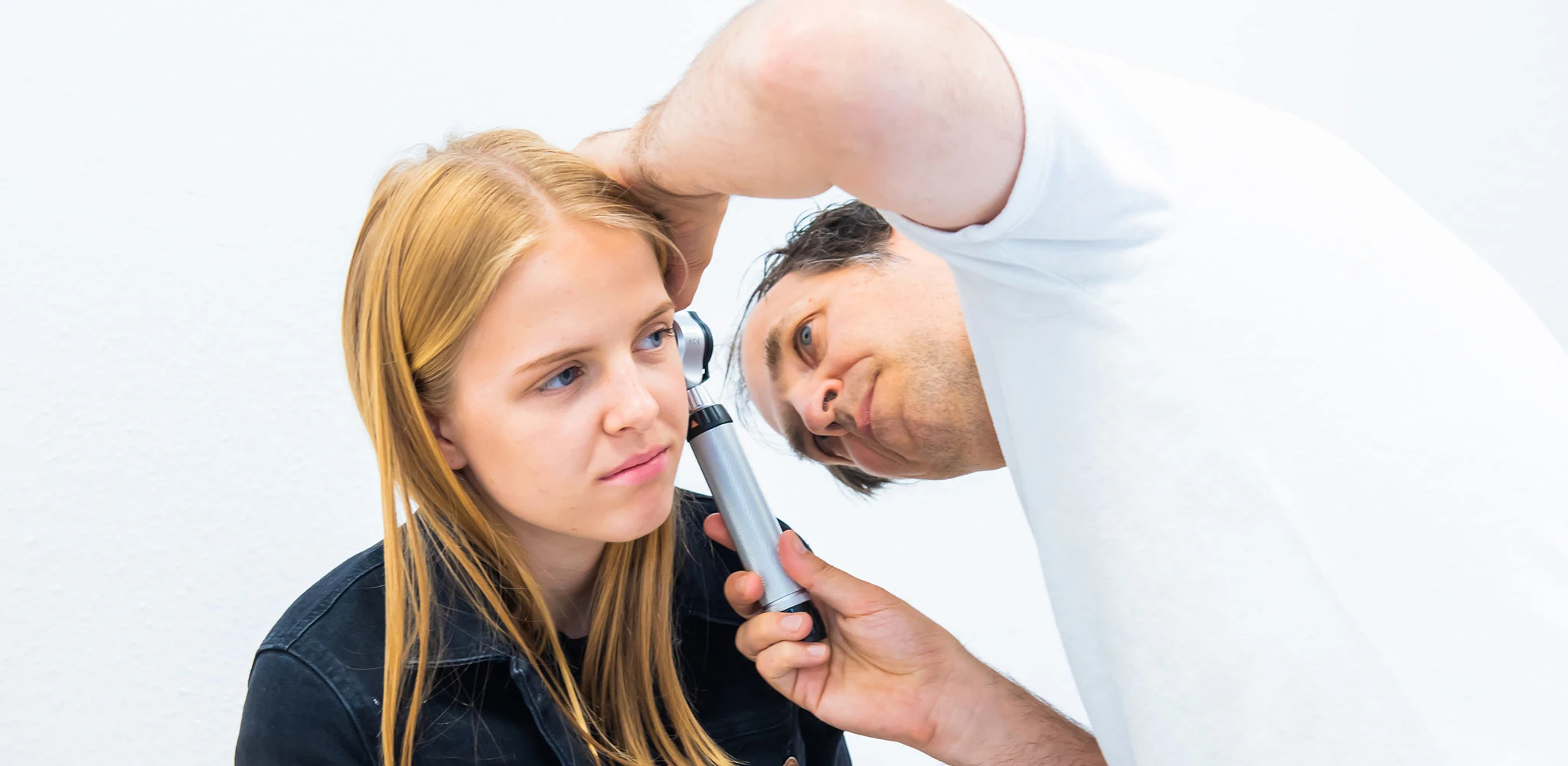
At the U7, the child is roughly two years old. As always at the U examinations, the child is weighed and measured and a quick look is taken at the immunisation record, which should actually be complete. Vaccinations are not actually due at this age if they have all been done so far.
Then we take a look at how the child is doing developmentally. It should be able to walk safely and stably and climb up somewhere. The child should also start to be able to stack three or four blocks on top of each other and want to turn things upside down. This does not have to be perfect, but the turning movements should be indicated.
A large and interesting block is always the topic of language, because at U7 the children present themselves in a broad spectrum. It would be nice if a child spoke 40 to 50 words by the age of two: "mummy", "daddy", "car", "ball", etc. ... And they should also start to combine two words, i.e. "mummy come", "daddy go", "cat tree" ...
However, this is not yet the case for at least a quarter of children. It is then important to check whether the children have good listening and speaking skills and understand what you want them to say. Another good sign of language development is when the children start to do little role-playing games, such as giving a doll something to drink, selling something or pretending to be on the phone ... Such symbolic games are always a good sign that language development is on the way.
And even if not everything runs smoothly, in most cases parents can be reassured that the onset of speech will come between two and two and a half years at the latest.
In addition, the U7 is always used to see whether the children can already separate from their parents a little. At the age of two, a child should understand that when mum leaves the room, she has not disappeared but will come back. There should also be a second or third carer with whom the child can also stay relaxed for a while.
Dental care is also addressed, and in most cases there should at least have been a first visit to the dentist. We also check the eyes again, usually with the Plusoptix device. After the examination, there is still time for questions from the parents.
Further interesting tips
Stool examinations
One issue of increasing importance is unnecessary and often expensive faecal examinations. Very few very useful tests can be carried out with a stool sample. But it can also be used to do a whole lot of - to stay on topic - crap.
What makes family easier
Many people already know that Doc is a big fan of Nora Imlau. So it goes without saying that he was delighted with her new book "Was Familie leichter macht". It's also clear that he read it straight away.
Self-harming behaviour II
A difficult, stressful topic: self-harming behaviour or scratching. The doc gives us the most important facts in a nutshell. For anyone who would like to read more, here is a link to an interview that the child and adolescent psychiatrist Frank Köhnlein gave to the Swiss parents' magazine "Fritz und Fränzi".