
The US precaution: the colourful examination
In our series on the U examinations, this time we look at the U8. The focus here: Movement, language, logic.
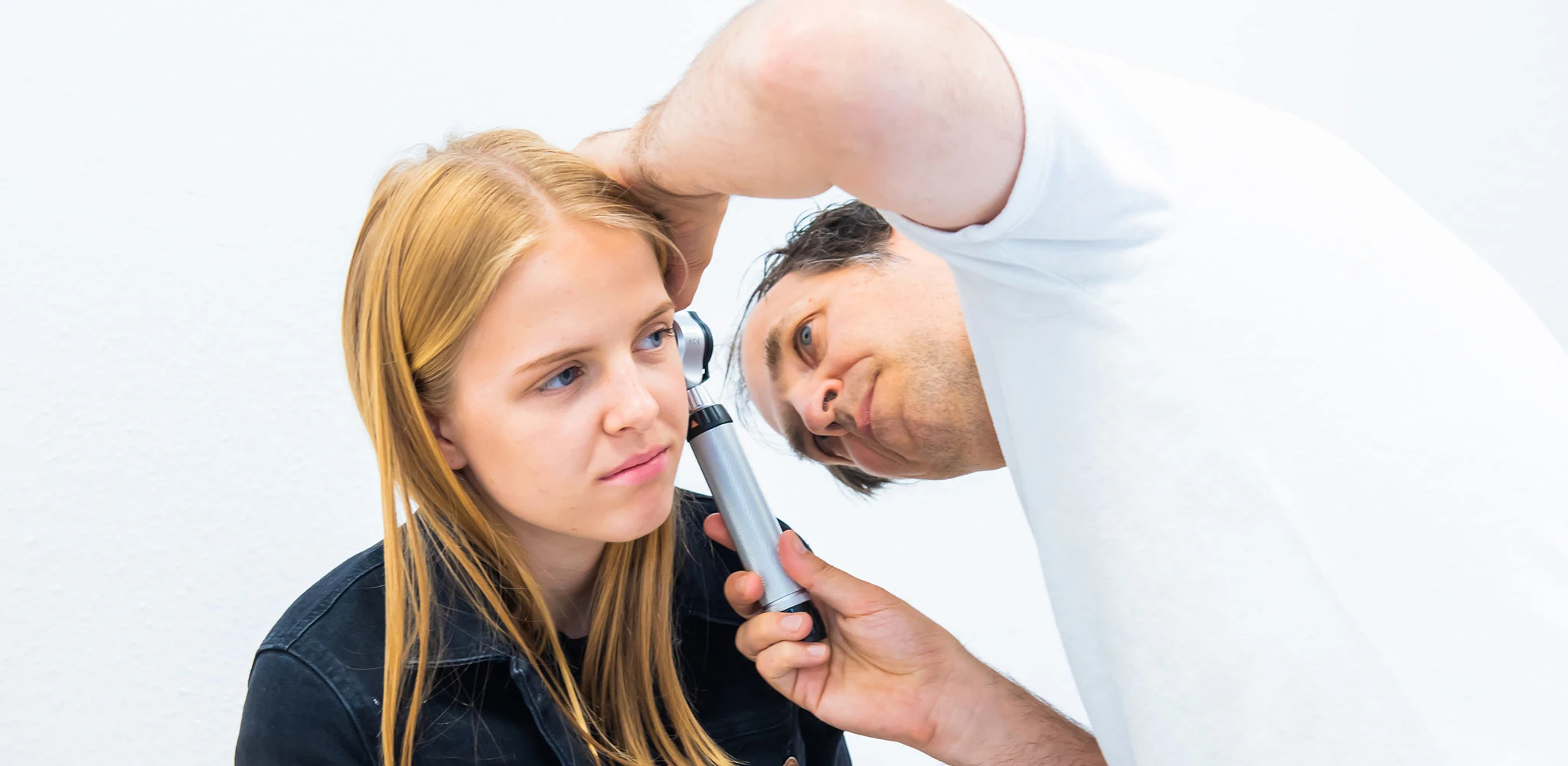
At the U8, the children are around four years old. As with all screenings, they are measured and weighed, there is a hearing and eye test, the immunisation record is looked at and the parents are talked to a little about how social life is going at nursery school.
And then the U8 is a nice examination because you can do a lot of active things with the children: The children have to balance, stand on one leg, they have to draw simple geometric figures and also a house and a person. (Although Doc is rather generous in his judgement here, remembering his own drawing and painting skills ...)
Then there is also a lot of linguistic development. The children look at a hidden object book together and are asked to tell a bit about what's going on. What's important is that they don't have to be able to speak everything perfectly at the age of four. They should form longer sentences, use grammar correctly as a rule and small mistakes are okay. And even if they still say "Dinderdarten" or "Sule", for example, in most cases this is no reason to get nervous at the age of four. Then you can wait and watch and give the parents a few tips.
Then the children have to complete sentences, memorise numbers and repeat nonsense words - all in all, it's a very colourful affair.
Of course, the children are also examined from head to toe and, as always, there should be time at the end to answer questions from the parents. At the U8 check-up, the focus is often on the topics of sleep and cleanliness.
Further interesting tips
Urinary tract infection
The child has to wee very frequently, is in pain or wets in an atypical way. Classic symptoms of a urinary tract infection. If you notice these in your child, you should pay particular attention to one thing.
Travel sickness
Oh, you wonderful holiday season. If only there wasn't one thing ... because all too often: holiday time is travel time - is time for spit-up car seats. This unpleasant phenomenon is called kinetosis or simply: travel sickness.
Free play
Not a ground-breaking innovation, but rather a reminder of what you should focus on in everyday life with children. Inspired by a quote from the educationalist Friedrich Fröbel, a plea for free play.