
Do not be frightened by night terrors
It sounds like a character from a horror story and can actually be quite frightening. Fortunately, however, night terrors are a harmless phenomenon.
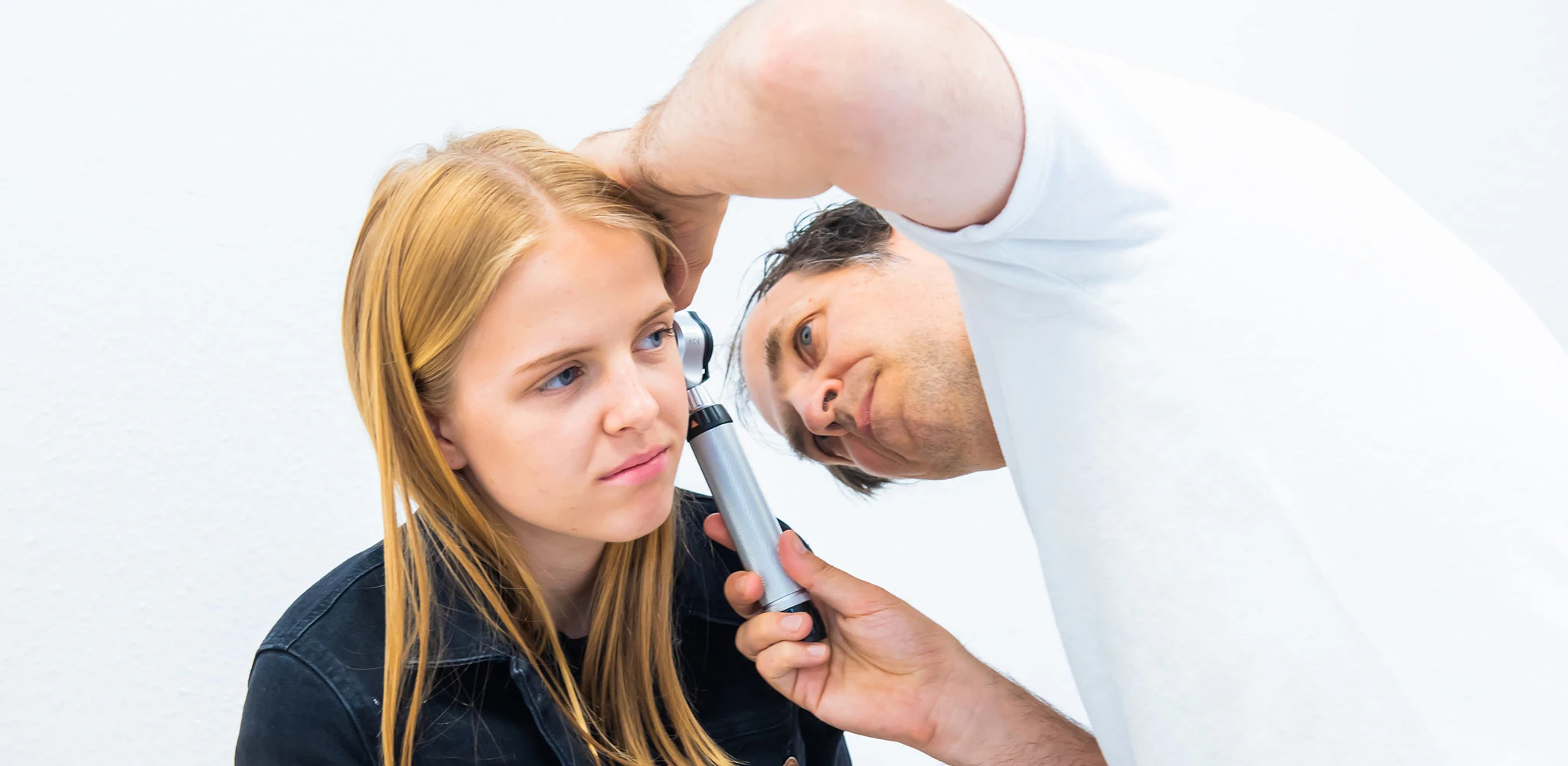
Night terrors, or pavor nocturnus in technical jargon, are not uncommon, especially in pre-school children. It is assumed that around 5 per cent of all children have night terrors. Typically, these children do not actually wake up one to four hours after falling asleep, but they are very agitated, kicking and screaming. When you speak to them, they stare right through you, are not really responsive, not really in their right mind. After about ten to 15 minutes, the spook is almost always over.
For the parents, this is very, very scary and hard to bear. The good news is that the children have no memory of what happened the next morning and are not harmed. What's more, the whole thing usually goes away without a hitch when the children reach primary school age.
Night terrors do not actually have the character of an illness, it is more a kind of maturation disorder of the nervous system that occurs temporarily (and tends to run in families). There is a theory that children who are particularly sensitive and also react very sensitively to noise and stress during the day are more prone to night terrors.
What should you do as parents? First of all, you have to put up with it and endure it. Of course, it is not a bad thing to be close to your child and talk to them, even if they don't really show any reaction. Doctors argue about whether it is good to wake the child or not. For some, the spooky behaviour stops immediately and they go straight back to sleep. However, other children are very disturbed when they are woken up - this has to be tested individually. In any case, there is no need for medical intervention and the most important thing is simply that you know what is going on when your toddler wriggles and screams in their sleep.
Further interesting tips
U6 screening
The U6 screening is the doctor's favourite screening. Because at 10 to 12 months, the children are still cute and baby-cute and not yet so big that they can blow up the whole examination with a violent tantrum (yes, there's all that ...). In other words, the U6 is usually a very pleasant experience. How does it work?
"Screen-free from three" campaign
Screen-free until three - Formatted textDocument A nationwide campaign has been launched in many German paediatric practices this week: "Screen-free until three". We are taking part - even at the risk of offending parents ...
Ringworm
There are always phases in which rubella infections increase. In the vast majority of cases, this is not a major issue for the children affected - and yet the disease can be problematic.