
What to do when your head is buzzing?
Today, this is a topic that very often needs to be discussed with parents in paediatrics. And it is also a very, very complex topic. It's about headaches in children. Don't worry: in most cases, it doesn't have to be a headache.
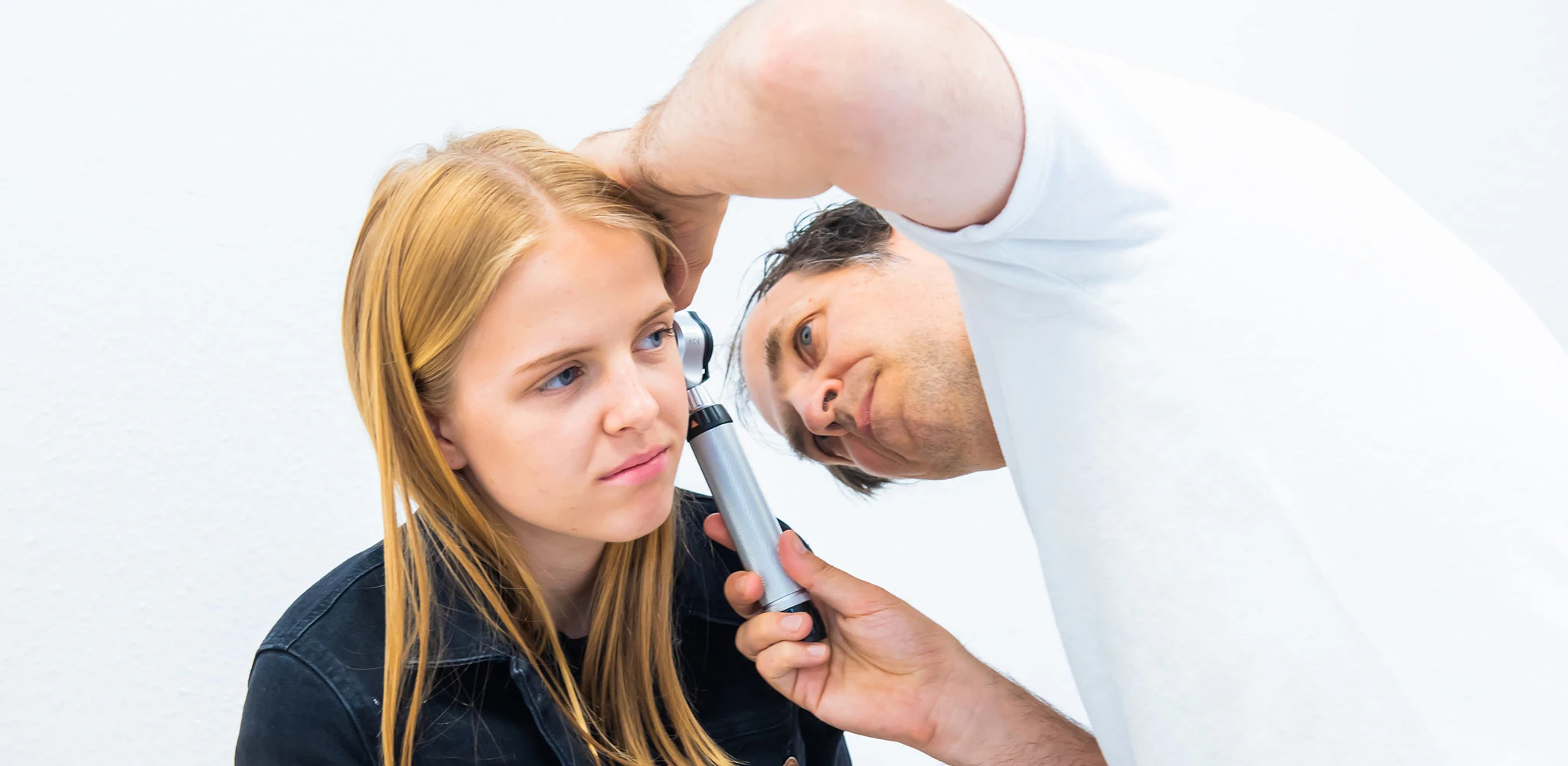
Unfortunately, headaches are a relatively common occurrence. It is estimated that around 90 per cent of all children have had headache episodes by the time they reach secondary school.
Firstly, we should differentiate between two things:
Primary headaches, which are headaches that have no organic causes. We know these as tension headaches or migraine headaches. The latter do not differ greatly from the symptoms of adult migraine headaches.
On the other hand, there are secondary headaches. These are headaches that have an organic cause. For example, an inflammation of the sinuses - or very, very importantly in children: a visual disorder. Or at least deteriorating eyesight, which can often lead to headaches. That's why it is fundamentally important to check the eyes and vision of children with headaches.
Fortunately, serious underlying diseases such as brain tumours or brain haemorrhages are very, very rare. Although this is very much feared by parents and is always mentioned very quickly when it comes to what could be behind the headache.
But at what point should my child's headaches worry me so much that I need to have them checked quickly? Quite simply whenever ...
... when the child has a really, really high temperature and is otherwise unwell.
... if the child vomits repeatedly and a lot and especially if it vomits at night.
... if the child also shows conspicuous neurological symptoms. If the child walks with a stagger, has slurred speech or other unusual behaviour - and also has increased headaches, then the whole thing should be clarified quickly.
In all other cases, you actually have time and should find out as precisely as possible when the headaches occur and how long they last. Keeping a headache diary is very helpful here.
The therapy usually consists of the children reducing their activity as soon as the headache occurs. They need rest, less light, less sunlight. Then you can try to get the whole thing under control with simple measures such as peppermint oil on the temples. And, if necessary, with painkillers. As a rule, please consult your doctor and take ibuprofen or paracetamol. Very important: no aspirin for children under the age of 15!
If these simple measures are not enough, more extensive therapeutic sessions and sometimes paediatric neurologists or paediatric pain therapists are required.
A very good summary of paediatric headaches can be found at the German Society for Migraine and Headache: https://www.kinderaerzte-im-netz.de/media/58b2db37b49d3811b100242d/source/wenn-kinder-kopfschmerzen-haben-incl-fragebogen-pdf..pdf
Further interesting tips
Affirmations
Today we have a combined topic, so to speak: it's about something very important when dealing with children and at the same time it's a gift idea. The keyword is: affirmations.
Constraints
Where does compulsive behaviour begin - what are normal rituals? Doc spoke about this with Frank Köhnlein, a specialist in child and adolescent psychiatry and psychotherapy. Here are the most important points from the conversation.
Adeonide
Is your toddler breathing strangely? Then enlarged adenoids could be responsible. We explain what this is all about - and what you can do about it.