
An investigation with foresight
Today we are talking about a very important device in our practice: the eye screening device! We use this to check the eyes of small children from ten to twelve months of age. It is a far-sighted examination - because serious visual defects can be recognised and treated in good time.
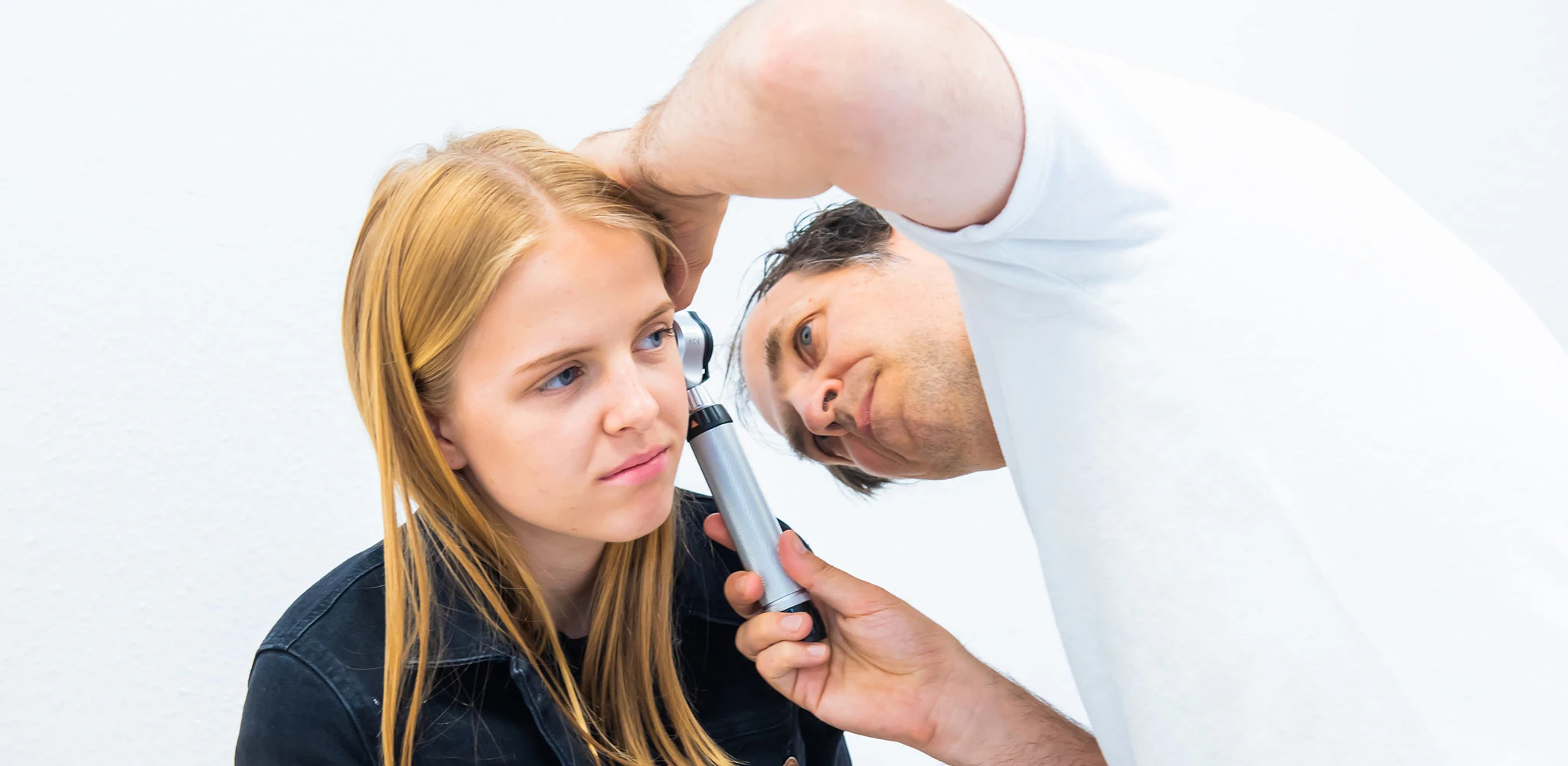
It's a really good thing that most practices have had an eye screening device for four or five years now - because it enables you to recognise very, very early on whether a child needs to see an ophthalmologist or not.
You can rely on the fact that children who are tested with this device and show no abnormalities are in order. Don't worry, for all other children this does not mean that they have a serious visual defect. But it does mean: Attention, dear paediatrician, please send this child to an ophthalmologist!
I can only urge you: Check with your paediatrician, make sure that your child is examined with such a device or by an ophthalmologist by the age of two at the latest, preferably by the age of one. Because there are congenital visual defects that you as parents do not notice and where it is not enough for the doctor to ask you as parents "Does your child see birds in the sky?" or "Does your child see crumbs on the floor?"
These congenital visual defects must be detected by a machine and/or ophthalmological examination. The great thing is that if you treat many of these visual defects at an early stage, you can often achieve excellent results. Or vice versa: if some visual defects are discovered too late, it is often almost impossible to regain lost vision.
Therefore: Make sure that your child receives such an ophthalmological screening examination as part of the U6 or U7 at the latest. Talk to your paediatrician. It is a far-sighted measure.
Further interesting tips
Nail bed inflammation
Today something from the category: small cause, big pain. It's about nail bed inflammation, also known medically as panaritium.
Hand-foot-and-mouth disease
An article from the category "It's funny what nature comes up with": hand-foot-and-mouth disease (HFMD). This is a viral disease that mainly affects kindergarten children and young primary school children.
Sitting
It's a small topic - but one that I get asked about very, very often. It's about the question: When is a baby allowed to sit?