
Jeez, my child has a tic!
Today we are talking about tics - a topic that causes great anxiety among parents. So let's start with the good news: for most children, a tic disorder is only temporary. And in most cases, it resolves itself. Sometimes after weeks, sometimes after months - but it goes away again.
What can tics look like? There is a broad picture here: from subtle blinking to complex motor tics to what is known as Tourette's syndrome, in which children also shout indecent faecal expressions. However, the latter is very, very rare.
In the case of motor tics, it's as if they drive into the children, they can't control it, it happens involuntarily. It is assumed that around five to ten per cent of children can be temporarily affected, and the whole thing is more common in boys.
It is then crucial to see how much the child is suffering. If the child doesn't find the tic that bad and there is no major teasing from the environment, then it is appropriate to do nothing and wait relaxed for the tic to subside on its own. This is of course all the more the case if the child is smaller/younger and the tic is not noticeably dramatic.
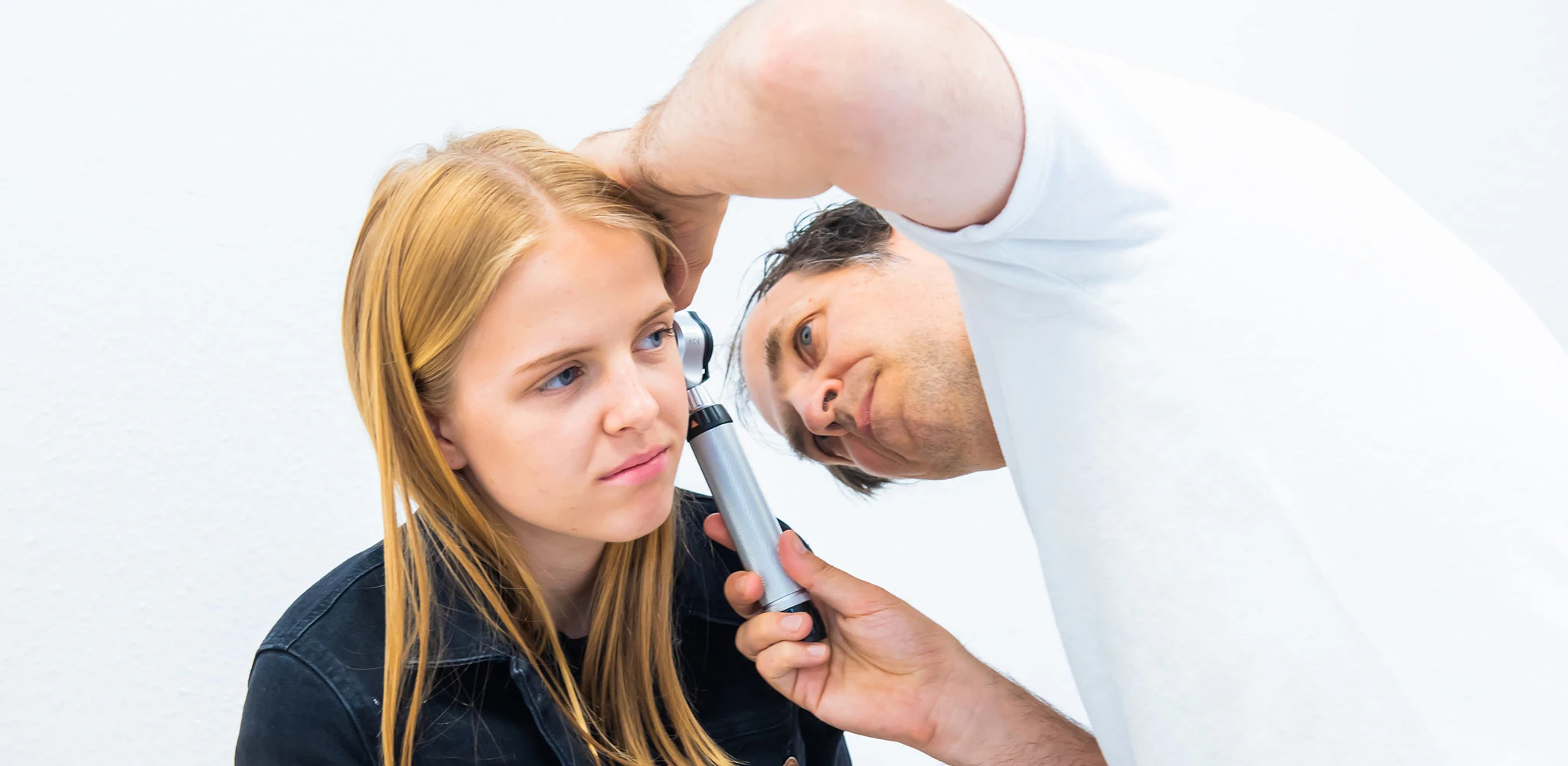
If the tics are more complex, it is always a good idea to consult a paediatrician. Especially as you should also check whether there is anything else wrong with the child. After all, it is not uncommon for children with tics to also have obsessive-compulsive disorders. And therefore, if these become more complex and persist, it is certainly a good idea to have someone specialised look at them.
It is then important to decide together whether the child needs therapy. If it does, there is the option of behavioural therapy, in which you try to learn with the child not to allow the tic to develop, but to suppress it, so to speak. The alternative is therapy with medication, i.e. pure pharmaceutical therapy.
Conclusion: A tic disorder sometimes looks scary, often disturbs the parents much more than the child and overall has a very, very good prognosis that it will disappear on its own.
Further interesting tips
Screaming / crying
Many parents, especially young parents, keep asking us: Why does our child cry so often / so long / so loud? Of course, there is no single answer to this question. But there are a few important things to think about.
Compare
"Never compare one child with another, but only with himself." A wonderful sentence by the educationalist Johann Heinrich Pestalozzi, who lived around 200 years ago.and yes, I know that's difficult.
Cuts for psychotherapists
The remuneration of psychotherapists is being cut - at a time when many children and young people are already not receiving the therapy they need. It's not just the doctor who finds this impossible.