
When your throat hurts
With all the justified corona debates, we should not forget the classic symptoms. A sore throat today. A very banal topic. Actually ...
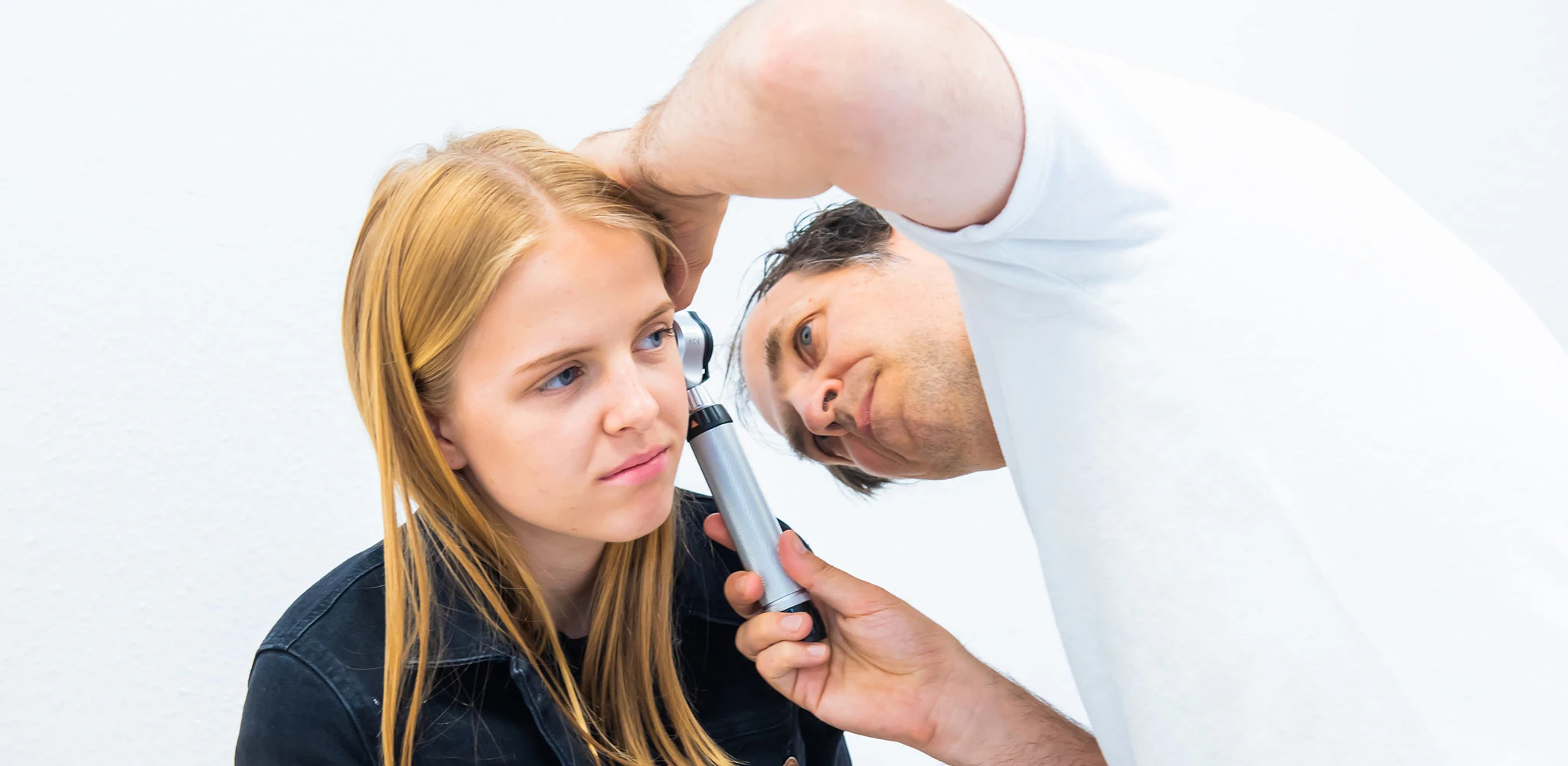
"Actually" because there is probably no other symptom in paediatrics for which the treatment guidelines have changed so much in the last ten to 15 years. Another problem is that there are still many half-truths and incorrect treatment instructions for sore throats in children, which have been reinforced by the internet.
It used to be assumed that sore throats caused by streptococci must be treated with antibiotics to prevent secondary diseases. Today we know that this is not the case. That is why the most important message is: sore throats in children rarely need to be treated with antibiotics. Such treatment should only be considered if the child is not feeling well at all. In other words, if the child is generally unwell, has a high temperature, a very severe, pronounced sore throat, can barely swallow and can hardly manage to drink. Then it is also advisable to take a smear test for streptococci. And if this is positive, to treat the child with antibiotics.
In all other cases, a smear test for streptococci is not even necessary, because if the child is in a good general condition, i.e. only a little feverish, a little sickly, but not at all threatening, then a smear test and antibiotics should not be necessary. Lozenges and gargling with sage tea will help here - and paracetamol or ibuprofen for the pain if necessary. That's all you need. What you have to do, of course: Keep an eye on the whole thing and contact the paediatrician again if it gets worse.
One question that is often asked in this context is about re-admission to community facilities. In other words, when can my child go back to nursery or school? Clear answer: As with other infections - when the child is fit and healthy again and fever-free for 24 to 48 hours. If antibiotic treatment is necessary, then at the earliest 48 hours after the start of treatment.
Further interesting tips
Antibiotics
CopyPublishAntibiotics can be great medicines, no question about it. But I maintain that they are still prescribed far too often and far too quickly. Here's some basic information to help you get a feel for when it's necessary.
School against children
Silke Müller, former headmistress and now one of the most incisive voices for digital ethics and educational justice as an author and speaker, has published a new book: "Schule gegen Kinder" (School versus Children) is a sharp appraisal of our school system and deals with the question of the extent to which our school system prepares children for life in a digitalised world.
U-examinations
They are fixed points for all parents: the famous U-examinations, which, at least in the early years, are documented in the equally famous yellow booklet.