
No fear of bumps on the head
Today once again something from the very important category: reassuring parents. It is not uncommon for them to call us worried because they have noticed a lump on the back of their child's neck or head. And this often causes great anxiety.
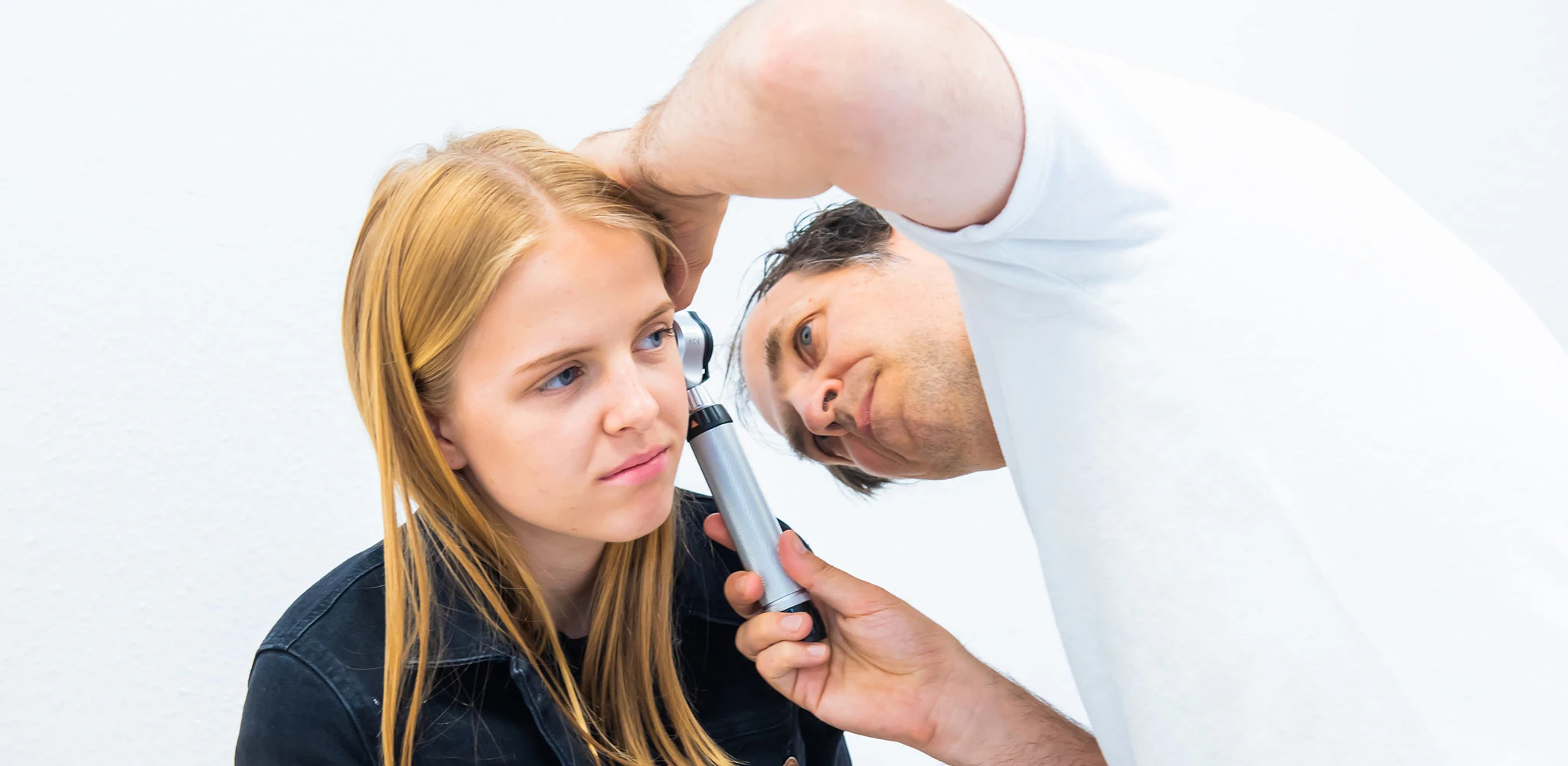
I won't keep you in suspense for long. The solution is as simple as it is reassuring. There are many lymph vessels in the neck and the back of the head. And especially in young children up to school age or even up to secondary school, it can happen very quickly that a lymph node swells and becomes thick and is easy to feel.
Don't worry: the whole thing is almost always relatively harmless. There is a rule: enlarged lymph nodes above the collarbone are harmless in children. It is important that the child is well, does not have a constant fever or weight loss or appears weak. If the child is well, a swollen lymph node is not an emergency and should not lead to a sleepless night for you, dear parents, out of sheer concern for your child's health.
A colleague friend of mine once put it in a nutshell: "Lymph nodes come quickly and go very slowly." This means that even a mild infection can quickly cause a lymph node to swell - and then stay there for ages without it having any pathological significance.
Nevertheless, as always, if you are unsure, you are welcome to show us the lump and we can discuss it in more detail. It's just important to me that you don't worry and think it's an emergency if you discover a small lump somewhere in your otherwise healthy child's neck or at the back of the head.
Further interesting tips
"Picky Eating"
Many parents are familiar with this: there's stress and arguments at the dinner table because the little one only eats the cheese or sausage - but not the bread. And definitely not cucumber - or even broccoli!!! Whatever the case may be, children can be terribly particular eaters. Under certain circumstances, this is known as "picky eating".
Heart pricking
A topic for parents with children who can already speak and express themselves well. It is not uncommon for them to come to the doctor's surgery or an emergency department with the worried sentence: "My child's heart is stinging!"
"I'm going to count to three ..."
There is currently a Unicef campaign "Never Violence", which emphasises how important growing up free of violence is for the emotional development of our children. Violence-free does not only mean free from physical violence, but also from verbal violence.