
Help, my newborn baby is yellow!
Today we're talking about very, very small babies - and newborn jaundice. It's not usually serious - but you should still keep a close eye on it.
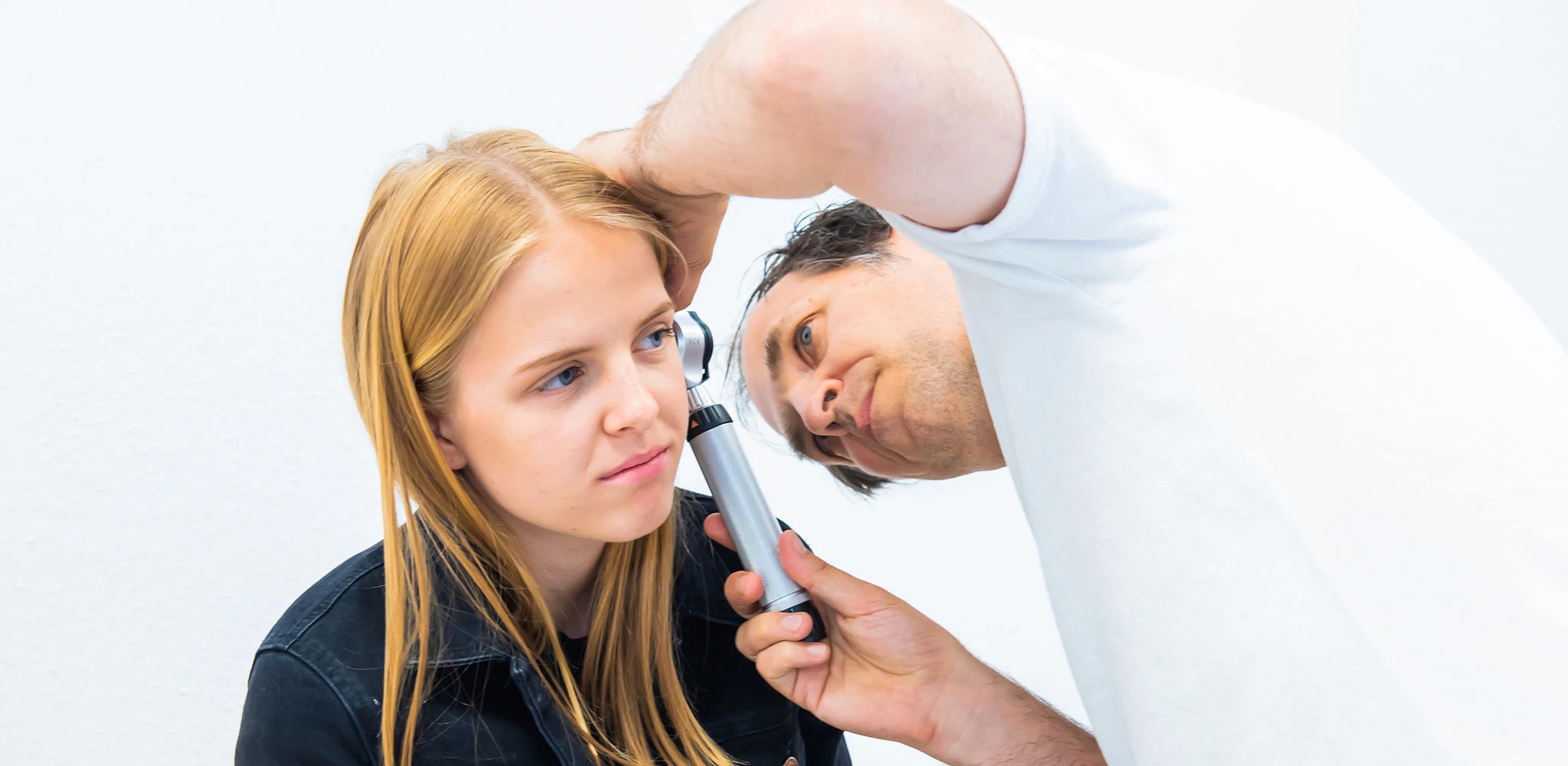
Newborn jaundice (neonatal jaundice) is not actually a disease, but rather a phase that two thirds of babies go through, a completely natural physiological process. And fortunately it is very, very rare that this jaundice is so pronounced that it has to be treated - otherwise it can cause irreparable damage to the baby's brain.
How does neonatal jaundice develop? It is caused by bilirubin, a breakdown product of haemoglobin metabolism (haemoglobin is a component of red blood cells that is responsible for transporting oxygen). This substance is responsible for the yellow colouring of the skin. Normally, bilirubin is processed in the liver so that the body can excrete it. In babies, however, this system is not yet properly developed in the first week or two. They therefore tend to have higher levels of bilirubin in their blood.
Typically, newborn jaundice begins on the second or third day of life, peaking on day five to seven. And after ten to 14 days, the spook is actually over. If children are exclusively breastfed, it can sometimes go on for three or four weeks. However, it would then be important to ask your paediatrician whether everything is okay. Otherwise, it is actually up to the midwife to first take a look at the baby and discuss with the parents whether this yellow colouring of the skin and often also of the sclera (the white in the eye) is still okay. The midwives actually have a very good eye for this - and if there are any concerns or doubts, they send the parents to the doctor's surgery. There, a blood test will determine whether the jaundice is still in the green zone or not. If the value is too high, then unfortunately the baby has to be sent to the paediatric clinic. There it is placed under a lamp with blue light - this causes the concentration of bilirubin in the blood to decrease again. Otherwise it can accumulate in the brain and cause irreparable damage.
To summarise briefly: Neonatal jaundice is not actually a bad thing, it's a natural thing. You just have to keep an eye on it - the old football defender adage applies: better safe than sorry. In other words, it's better to consult your paediatrician more often and have them take a look at your baby before you risk serious brain damage.
Further interesting tips
Advertising ban for sweets & co
In the UK, there has been a ban on advertising extremely unhealthy foods since January 2026. Specifically, products with significantly too much salt or significantly too much and too densely packed sugar may no longer be advertised on television before 9 p.m., and not at all online. Do we need the same in Germany?
Self-harming behaviour I
Today we are looking at a really serious topic: self-harming behaviour in young people. Unfortunately, we've been seeing more and more of this in surgeries in recent years. It typically becomes an issue from the age of around 14. It occurs more frequently in girls, but also in boys, also increasingly in recent years.
Grass does not grow ..
Let me start with a less glorious example of my own career as a father: We were on holiday and I thought, now I have to teach my child how to do a Köpper from the edge of the pool. My plan ended in a huge argument and a terribly bad mood.