
The U6 screening: Ready for the 1st birthday?
The U6 screening is the doctor's favourite screening. Because at 10 to 12 months, the children are still cute and baby-cute and not yet so big that they can blow up the whole examination with a violent tantrum (yes, there's all that ...). In other words, the U6 is usually a very pleasant experience. How does it work?
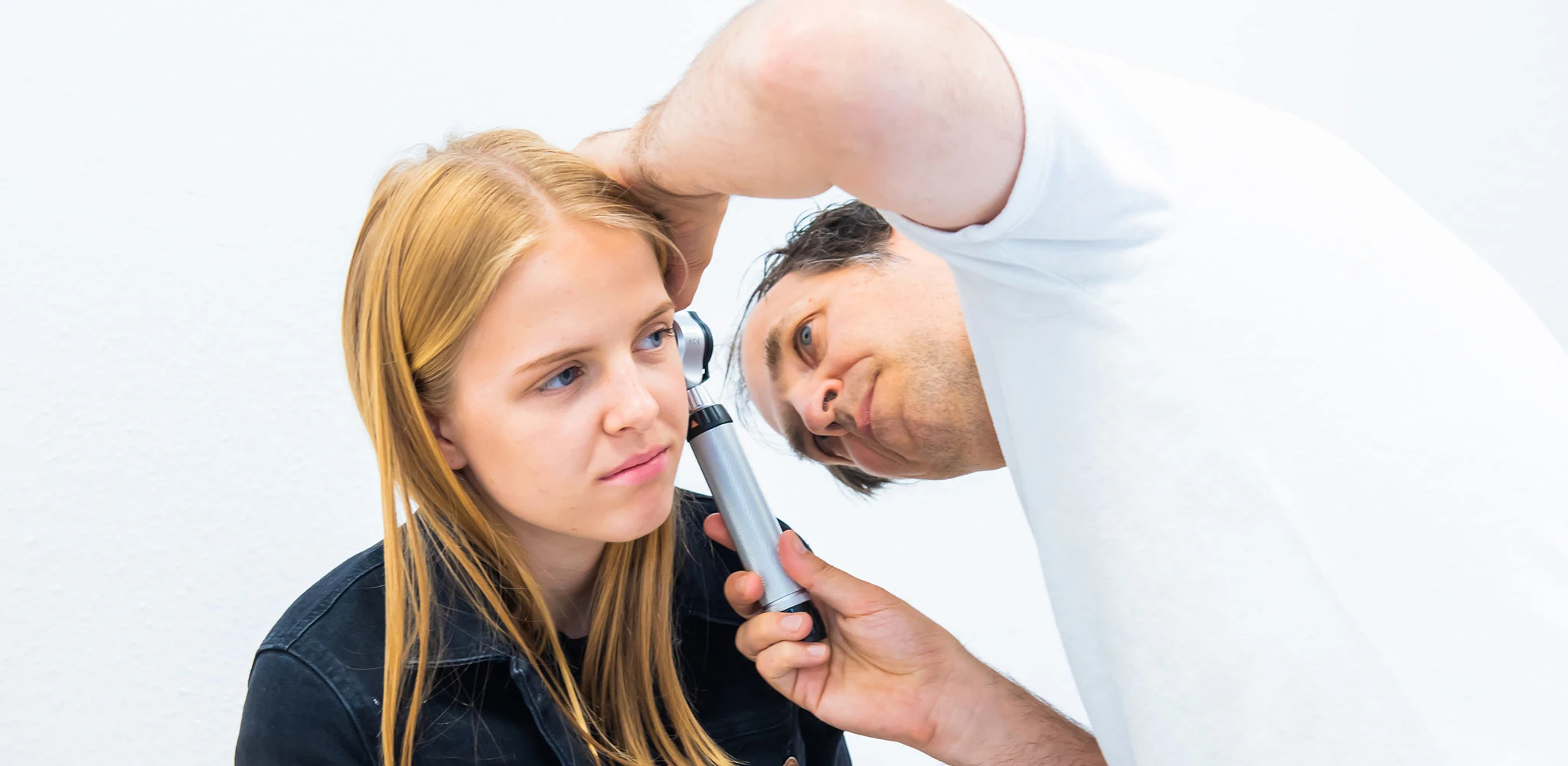
As always: weigh, measure, head circumference.
We also do an eye test with a device called Plusoptix to make sure that the eyes are good.
Then, of course, the parents have time for their questions.
We talk about dental care.
We talk about vitamin D prophylaxis.
The topic of nutrition is also very important, because children are allowed and expected to eat from the family table as normal from the age of one.
We also point out that they can now drink normal milk and no longer need infant formula - but it is also very important that they don't drink too much milk. So 200 to 300 millilitres in the second year of life is completely sufficient.
Then we take a look: How are speech and language comprehension doing? How do the children react when you speak to them, how do they respond to a "no"? Do they understand what you want them to do? Of course, they don't have to do it yet. Most children can form double syllables such as Ma-Ma, Pa-Pa, Des-Da.
Motor skills are very exciting: many parents think that a child has to be able to walk by the age of one. But it doesn't have to by any means. Free walking is not actually "mandatory" until 18 months.
At U6, it is important to me that the children can sit stably - and it is very nice when they can pull themselves up and then stand.
What also happens at U6 is immunisation. What exactly depends on where you are in the immunisation schedule.
That was, roughly summarised, the U6.
Further interesting tips
U7 screening
This time our presentation of the U examinations is about the U7. And a big block is how far the child has already developed linguistically.
Nature never disappoints
I once read this sentence in a parenting book and I have to say: it's simply true. With my children, too, it was sometimes a fuss until they were dressed, they whinged that they didn't want to go out and it took forever until we were outside. But when we were outside, in the snow, by the stream, in the meadow, somewhere in nature, it was always great, the children always had fun discovering something, something that interested them.
Ticks
My conclusion after almost 15 years as a paediatrician in private practice: tick-borne diseases are probably the most overestimated health risk - at least from the parents' point of view.