
When the doctor scares you...
There are always children who are terrified of their paediatrician - or of a visit to the surgery. What can you do about it? A lot.
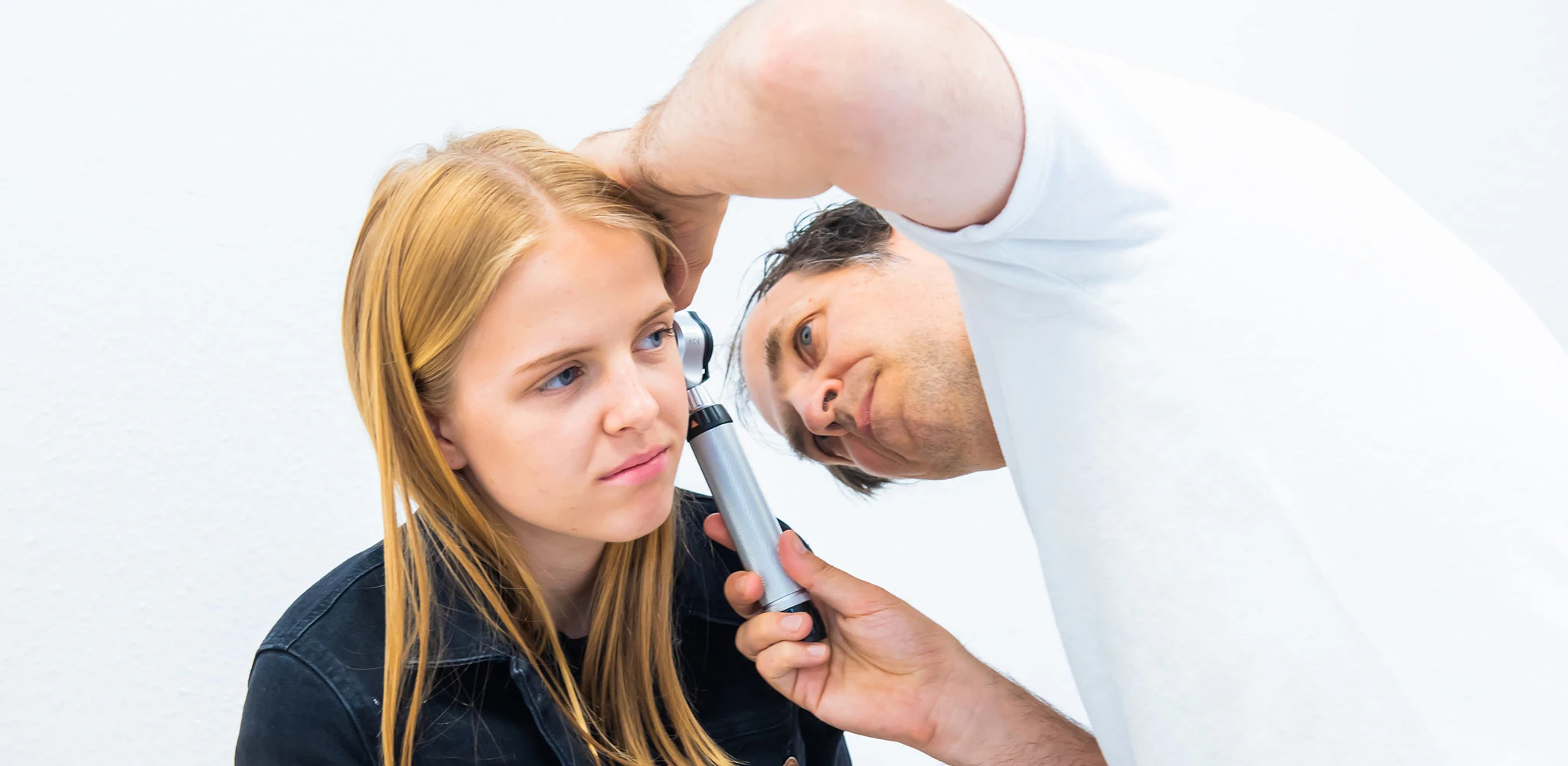
First of all, let's get one thing out of the way: If your child is doing well in life, is off to a good start overall and only has isolated fears (e.g. of visits to the doctor), then you can leave it at that for the time being. That is very important. So, don't always dwell on it or argue with your child, but simply accept it. That's the way it is - and it usually gets better as your child grows up. However, it's not usually something that can be fixed in a flash.
The next point: you need to realise when a visit to the doctor is really necessary. And when it can be avoided. Nowadays, you can clarify a lot of things via video, email, photos and telephone - without having to drag the child to a doctor's surgery.
However, if a visit to the doctor's surgery is really necessary, for example for an examination, a vaccination, a laceration, etc., then three aspects are very, very important:
As an adult, as a mother or father, you must have a clear inner attitude towards this matter. And communicate this to the child. "Mum and dad have decided that we're going to get vaccinated today. We can do it together. We trust you to do it." Period.
You should still recognise the child's fears, worries and needs. In other words: give the child some feedback. "I can see that you're very scared. I can see that you're worried. But hey, we'll get through this together. You can be scared, you can cry. But we'll get through it together."
And when it has worked out, it is very important to give the child a framework in which they can work through the whole thing again, look at their emotions together once more and give them feedback: "Wow, I saw how scared you were and that you still managed to cope." And/or you can let your child describe how they felt in the situation once more. Then you can also praise them for enduring the fear and coming out of the situation stronger. You can also offer comfort - and then all will be right with the world again.
What is of little or no use is trying to reason with your child when they panic. Even persuasion is usually unsuccessful. In a situation like this, we adults - doctor and parents - have to take decisive action together. And then, for most children and parents, the medical intervention or procedure in the practice is easy to endure.
Incidentally, these three points come from the concept of "non-violent communication" by Marshall B. Rosenberg. If you want to know more, you can start here on Wikipedia.
Further interesting tips
Compare
"Never compare one child with another, but only with himself." A wonderful sentence by the educationalist Johann Heinrich Pestalozzi, who lived around 200 years ago.and yes, I know that's difficult.
Children's hospice services
A very serious, sad topic, but one that is incredibly important. And interestingly, if you take a closer look, it also has many beautiful, cheerful aspects. It's about children's hospice work.
Sauna with a child?
From a medical point of view, there is no question that going to the sauna is a healthy thing to do. Regular sauna sessions strengthen the immune system and do something good for the cardiovascular system. But is it also good for children? And if so, from what age?