
When does a child need treatment?
Recently we have been asked more often: "What is actually a good reason to come to the practice with my child?" The answer is not that difficult ...
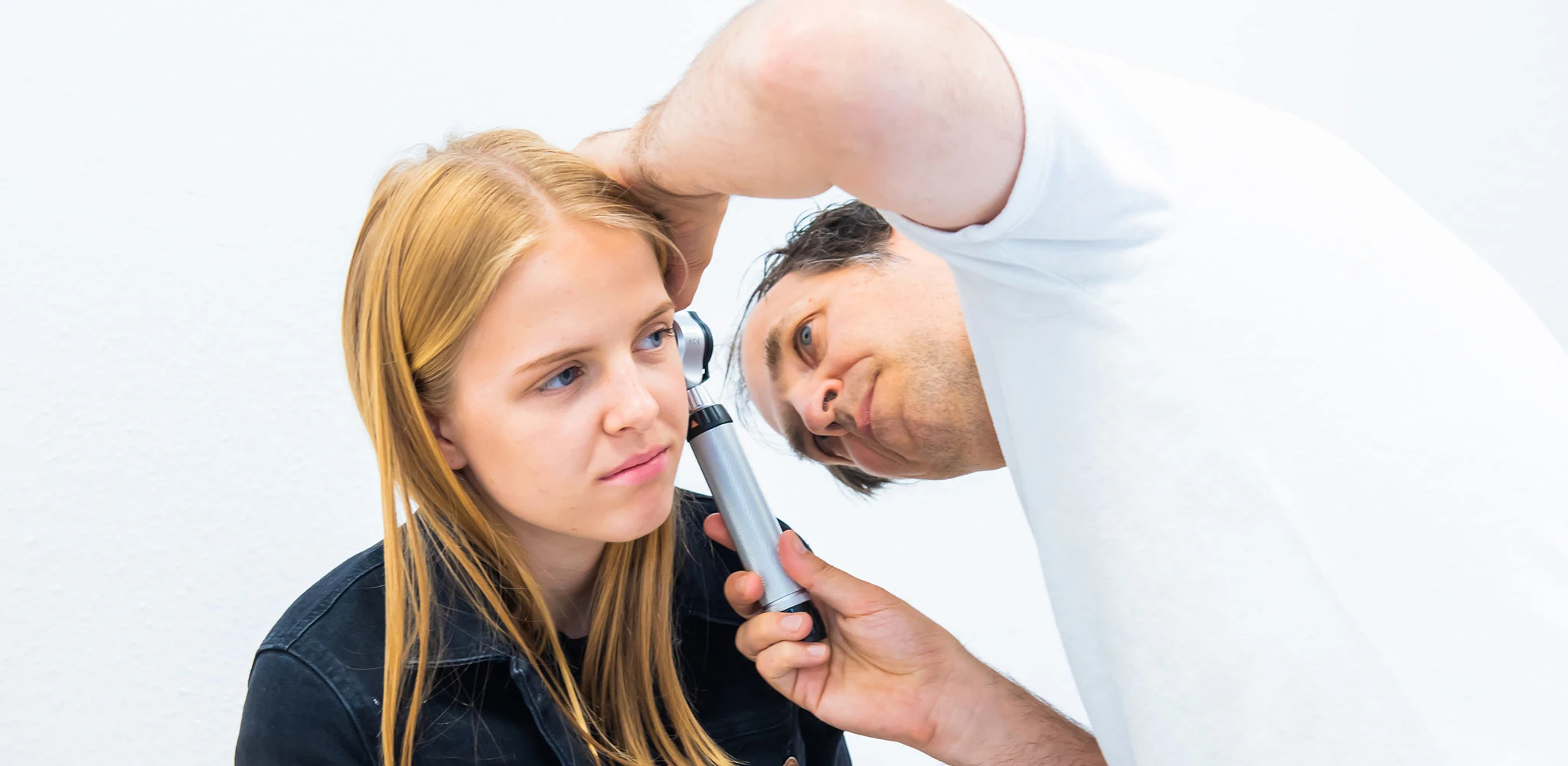
Firstly, we are of course happy to take a look at any child whose parents are concerned. However, we can give you, dear parents, a few tips and guiding thoughts on when a visit to the paediatric practice is necessary and when it is not.
The most important thing when assessing a child is their general condition. You can't say anything about individual symptoms such as vomiting, fever or diarrhoea. It is never the decisive criterion whether a child has vomited two or four times, had one or four thin stools or has a temperature of 38.2 or 38.6. It is always about the following three aspects:
What does the child look like? Is it reasonably well perfused, does it have a good facial colour?
Is the child drinking properly?
And most importantly, does it appear apathetic and/or lethargic?
The child may be tired and sleepy, but it must respond when you want something from it. It should be interested in a book or a DVD and it must have phases in which it runs around the house, etc.
Parents must always realise this: When a child gets seriously ill, the first thing the body does is switch into energy-saving mode. And to move less.
Therefore, especially now that winter is approaching and we already have a wave of infections in early autumn: If your child is only coughing, only has a cold, has a few gastrointestinal symptoms but is otherwise in a decent general condition, then we doctors don't need to look at the child straight away.
However, it is also important that if you have any doubts, please contact us, even if only by e-mail at first. And of course we will, want to and must always look at the child if you feel unwell about its state of health.
Further interesting tips
Sitting
It's a small topic - but one that I get asked about very, very often. It's about the question: When is a baby allowed to sit?
Devil's circle of movement
"Bird flies, fish swims, man runs" Emil Zatopek, the legendary Czech long-distance runner, once said. And the man was right! Running, racing and exercise are part of our basic genetic make-up. But they should also do it - especially children.
What makes family easier
Many people already know that Doc is a big fan of Nora Imlau. So it goes without saying that he was delighted with her new book "Was Familie leichter macht". It's also clear that he read it straight away.