
Why does the baby put its hand in its mouth?
When a baby puts its hand in its mouth, parents almost always have one reflex: there's definitely a tooth coming. If I wanted to live from hand to mouth (not in the original sense, of course), I would have realised my brilliant idea long ago - and invented the so-called dentiometer for the U4 examination.
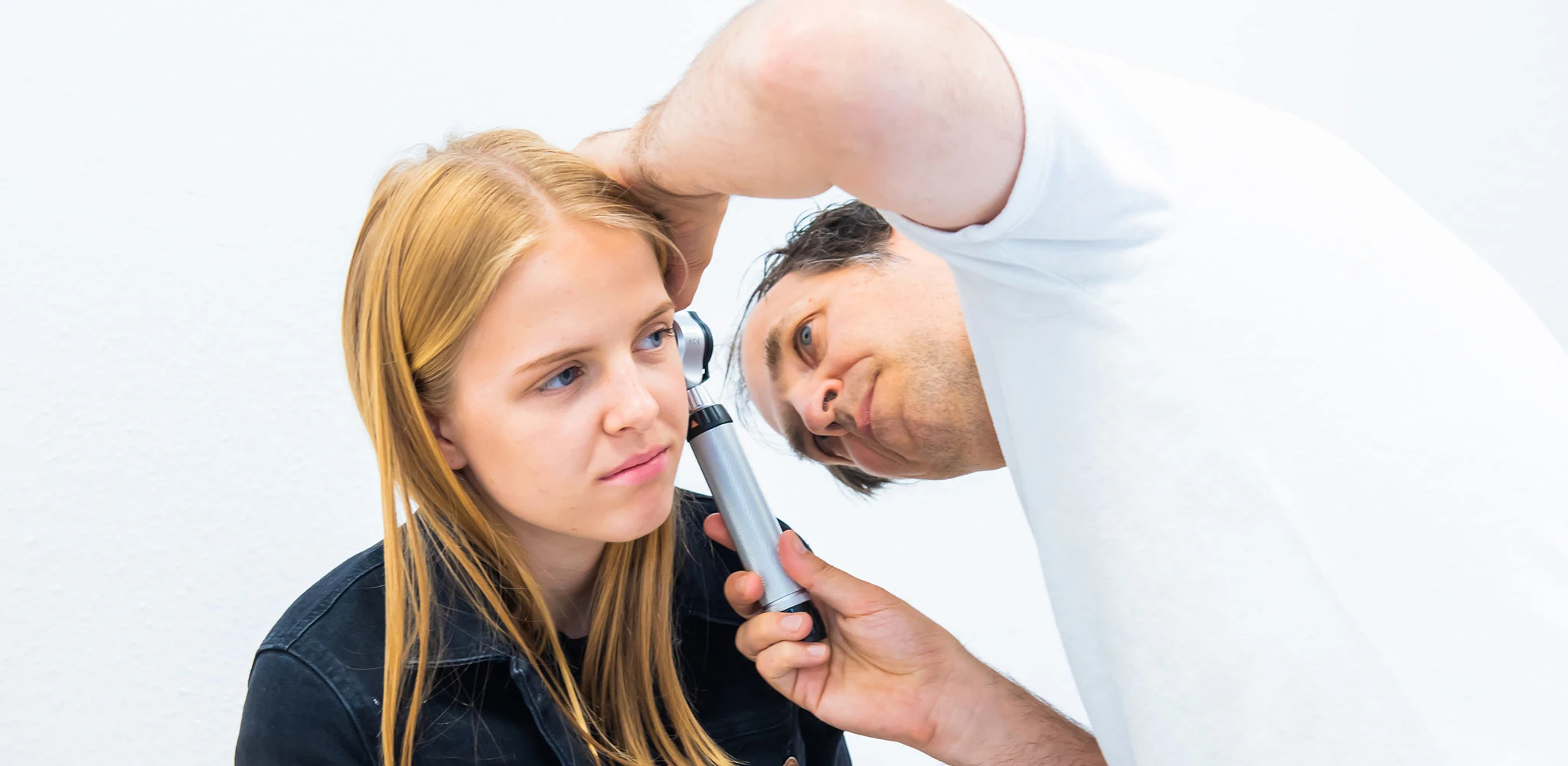
My plan: to make a device that resembles a Geiger counter. And when the children come to me at U4, i.e. when they are three or four months old, I run the device over their mouths, make a funny noise and tell their parents: "It will be another six, eight, maybe even ten weeks before a tooth breaks through at this point."
What makes me think that? Because I'm asked at every U4: "Don't you think there will be teeth coming soon because our baby is putting his hand in his mouth so much and he's drooling so much?"
The fact is that most babies don't get their first tooth until they are six to eight months old. And children don't put their hand in their mouth at four months because they are about to teethe - but because they can. In the weeks before that, the child is not yet able to coordinate its movements properly. But after three months it gets the hang of it:
a) My hand
b) My mouth
c) I can put my hand in my mouth.
And that's exactly why they do it so much and drool accordingly.
But in most cases it has nothing to do with teething. And if they don't believe me, then maybe I'll introduce the dentiometer examination for 20 euros an hour and predict the first tooth for parents. You know: in six, eight or ten weeks.
Further interesting tips
Doctor's visit not necessary
Don't worry, we don't want to put anyone off. On the contrary. Everyone is welcome. We are always happy to see you again. Even if the occasion is often not a particularly good one. Nevertheless, we want to help you to know when a visit to the paediatrician's surgery is not necessary. To make life a little easier for you and us.
Fever
Many parents have one thing in common: the fear of a high temperature. Especially when the body temperature exceeds the 40-degree mark. The following lines should help you to correctly assess a fever.
School against children
Silke Müller, former headmistress and now one of the most incisive voices for digital ethics and educational justice as an author and speaker, has published a new book: "Schule gegen Kinder" (School versus Children) is a sharp appraisal of our school system and deals with the question of the extent to which our school system prepares children for life in a digitalised world.